How to Choose a Travel Crossbody Bag: Size, Strap and Anti-Theft Features (What to Check)
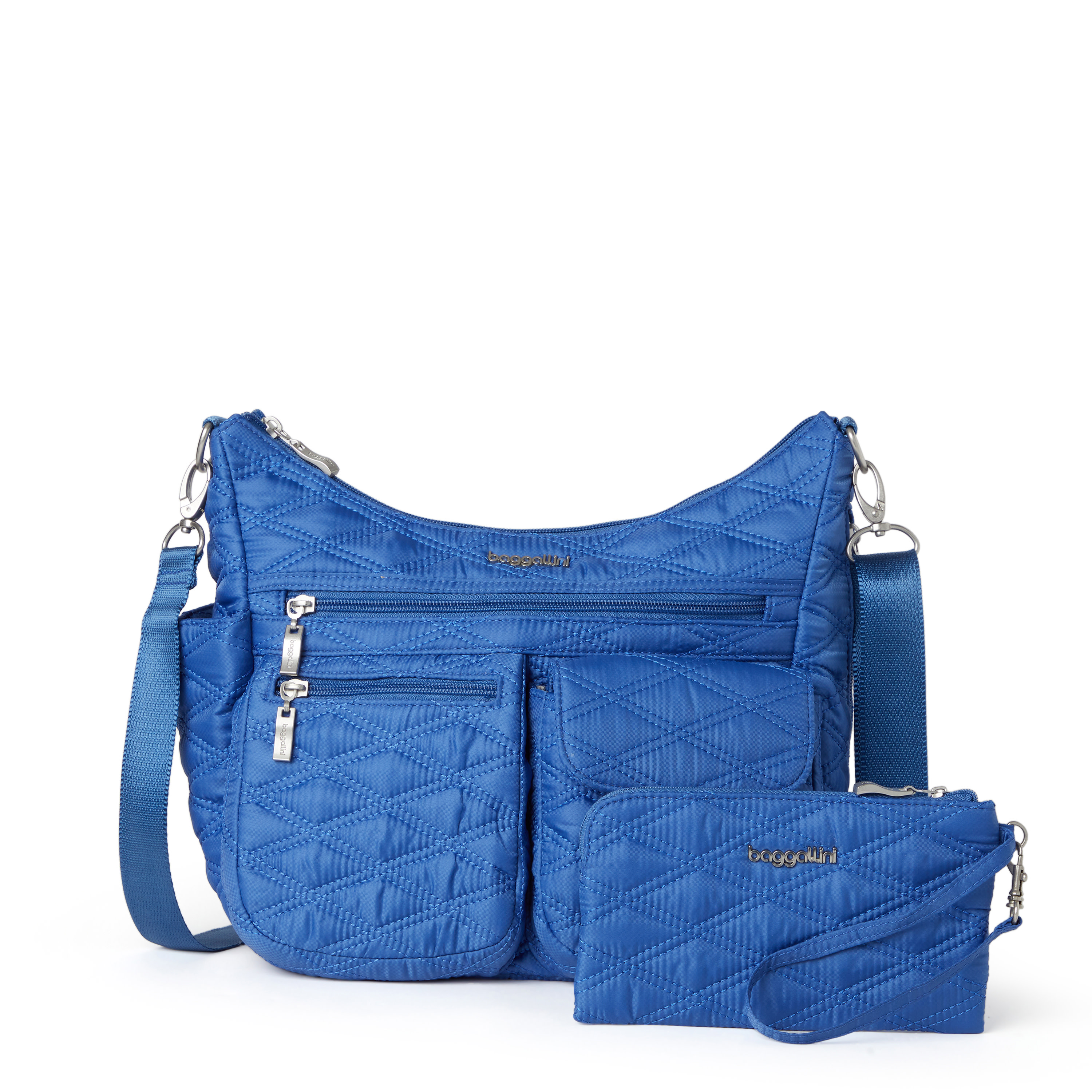
A good everyday or travel bag does more than hold things. It keeps your phone, cards and passport where you can find them, stays comfortable for a full day of walking and makes life harder for pickpockets. Product photos rarely show any of that, so this guide covers the measurements, features and policies to check when you buy a crossbody, sling or travel bag online.
Start with what you actually carry
Lay out what you would put in the bag on a typical day: phone, wallet or card case, keys, sunglasses, a water bottle, maybe a tablet or a compact umbrella. Then compare that pile with the bag's measurements and capacity.
- Dimensions: width, height and depth in inches. Depth matters most; a 1-inch-deep bag will not take a water bottle no matter how wide it is.
- Capacity in liters: roughly 2 to 3 liters fits phone, cards and keys; 5 to 7 liters fits a bottle and a light layer; 20 liters and up is weekend territory.
- Weight: an empty bag of 8 to 12 ounces will feel light all day; heavy leather or hardware adds up fast.
If you can, compare the listed measurements with a bag you already own. Measure its width, height and depth with a tape measure and note what fits comfortably. That one reference point makes online size charts far easier to judge than photos, which are often styled with a model of unknown height or shot with props that make the bag look larger or smaller than it is.
Check the strap and how you will wear it
- Strap length: look for the maximum length or "strap drop." Taller people, and anyone wearing a bag across the body over a winter coat, usually need a longer strap.
- Adjustability and width: a wider, padded strap spreads the load on longer days.
- Convertible options: some bags switch between crossbody, shoulder and backpack carry, or come with a detachable wristlet.
- Sling versus crossbody: slings sit higher on the chest or back and are easier to swing to the front in crowds; crossbodies sit at the hip and are easier to reach into while walking.
Understand anti-theft features
Travel bags increasingly advertise anti-theft features. They are worth paying for in busy cities and transit hubs, but know what each one does:
- RFID-blocking pockets shield contactless cards and passports from unauthorized scanning. Useful, but only for items stored in those pockets.
- Slash-resistant panels and cut-resistant straps stop thieves from cutting the bag open or cutting it off your shoulder.
- Locking zippers clip to a loop so a hand cannot quietly unzip the bag.
- Lock-to straps let you secure the bag to a chair or table at a café.
A bag without these features can still be safe if it zips fully, sits in front of your body and has an interior zip pocket for valuables.
Look at fabric and organization
Nylon is light, water repellent and easy to clean; recycled nylon versions perform similarly. Leather is heavier and needs more care. Check whether the fabric is described as water repellent (sheds light rain) or waterproof (rarer), and whether the bag is machine washable. Inside, count the pockets you will really use: a phone pocket you can reach without opening the main compartment, a key leash, card slots and a zip pocket for a passport.
Color matters more than it seems. Dark nylon hides scuffs and travel grime, while light colors show marks but make it easier to see what is inside. A contrasting lining also helps you find small items quickly. Check the hardware as well: metal zipper pulls and strap clips are more durable than plastic, and an oversized pull is easier to use with gloves or in a hurry at a security line.
Carry-on bags: measure against your airline
Carry-on rules are where bag buyers most often get caught out. For a suitcase or under-seat bag, compare the dimensions, including wheels and handles, with your airline's limits. A listing that says "meets most carry-on requirements" is not a guarantee, especially on smaller or budget carriers. Check the empty weight too, since some airlines also limit carry-on weight, and remember that an expandable zipper can push a compliant bag over the limit.
Read shipping, return and warranty terms
- Free-shipping threshold and what shipping costs below it
- Return window, condition (unused, tags on) and Final Sale exclusions
- Whether exchanges are offered or you must return and reorder
- Whether original shipping or return labels are charged
- Warranty length and what it excludes, such as wear and tear or airline damage
- Whether the store ships to your country
When the bag arrives, test it before you remove any tags. Load it with your usual items, wear it around the house for an hour, try the strap at different lengths and check that the zippers run smoothly. If the bag is going on a trip, pack it as you would for the airport. Keep the packaging until you are sure, since many stores only accept unused items with tags attached.
For an example of how one travel-bag brand lists measurements, anti-theft features and policies, see our Baggallini review.
A quick checklist
- Depth and capacity in liters match what you carry
- Empty weight under about a pound for all-day wear
- Strap length that works over a coat and for your height
- RFID pockets, slash-resistant panels or locking zippers if you need them
- Water-repellent fabric and a reachable phone pocket
- Carry-on dimensions checked against your airline
- Return window, Final Sale rules and shipping costs